

About Volvariella (Tentang Jamur Merang)
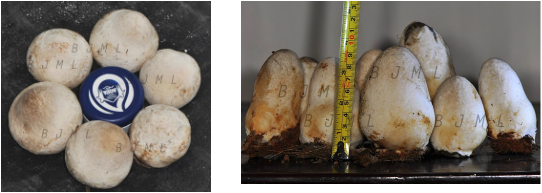
Volvariella volvacea, commonly known as straw mushrom, is one of the Basidiomycetes under the Family Amanitaceae. It is an obligative saprophytic fungus, humicolous or humus-inhabiting, growing on decaying plants and taking up necessary nutrition from them. It grows at lower light intensities, so it is a sciophyte . An environment of higher relative humidity (above 80% and temperature (above 30° C) is favourable for the growth of this fungus . The straw mushrooms have long been cultivated on rice straw as a highly prized edible fungus by Chinese and by other people in South East Asia countries such as Malaysia, Indonesia, Thailand, Burma and the Philippines, not only on the basis of their flavor, but also because of definite food values which they possess. Although straw mushrooms contain less protein than meat and fish, they compare favourably with most fresh vegetables in protein content and are good sources of vitamins and minerals . The data (unpublished) resulting from a study of the nutrient content of the straw mushroom show that the straw mushroom even surpasses the white mushroom (Agaricus bisporus) in nutritional value. In the western countries, as far as we know, the straw mushroom is little cultivated. Literature on Volvariella volvacea is scare.
The straw mushroom has not been very much studied by modern authors as was noted by Singer (1961, p 120) : "The develop mental, cytological, and physiological characteristics of the padi straw mushroom are little known, nothing has been published on the genetics of this fungus, or on the phylogeny of the cultivated races" . Cultivation Technology of Paddy Straw Mushroom (Volvariella volvacea) Cultivated in most of the states, where agroclimatic conditions suit and agrowaste is available in plenty. LIFE CYCLE AND GENETICS OF BREEDING SYSTEM In contrast to green plants, most mushroom species are haploid, and diploid phase is normally transient and restricted to the basidium. Paddy straw mushroom has distinction from other mushrooms. Being homothallic species, the individual uninucleate haploid self fertile spores germinate to produce mycelia and completes the life cycle without the need of a mating type factor. Clamp connections are entirely absent in Volvariella spp. In V. volvacea, the hyphal cells are multinucleate, clamp connections are absent and basidiospore receives only one nucleus each following meiosis. Wide variation exists in growth rate and other characteristics of single spore mycelia. It is still difficult to call this mushroom as primary homothallic as the research carried out by different workers have given different explanations behind existence of self fertility among majority of the basidiospores and non-existence in minority of the basidiospores. |
|


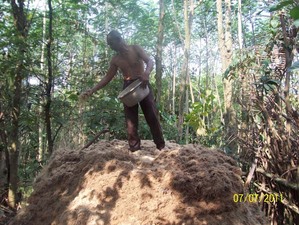 Compost Substrates
In Indonesia, some waste substances can be used as growing media for Volvariella Volvacea i.e Paddy straw waste, cotton waste, sagoo waste (ampas aren), sugar leafe and bagasse, sugar waste, corn waste, Oil Palm waste, water hyacinth and many more substances.
Each substance has different characteristic from others in order to be used as compost media for growing paddy straw mushrooms, composition for compost and the length of composting periode may vary. Some trial and error would be need to get wich composition of substance and nutrition can produce good production in harvest time.
|
